Thinking about Salesforce CRM but confused by the pricing? You’re not alone. With so many plans, add-ons, and hidden costs, understanding Salesforce CRM pricing can feel like decoding a secret language. Let’s break it down—clearly, honestly, and without the fluff.
Salesforce CRM Pricing Overview: What You’re Really Paying For

Salesforce CRM pricing isn’t just about a monthly fee per user. It’s a layered ecosystem of plans, features, and scalability options that can either empower your business or drain your budget. Understanding the big picture is the first step to making a smart investment.

How Salesforce Structures Its Pricing Model
Salesforce uses a tiered subscription model based on functionality, user roles, and volume. Each plan offers a different set of tools, and the price scales with the number of users and additional features. This means you pay more as your team grows or as you unlock advanced capabilities.
- Subscription-based pricing (monthly or annual)
- Per-user, per-month billing
- Tiered plans: Essentials, Professional, Enterprise, Unlimited
- Add-ons and premium features cost extra
This structure allows flexibility but can lead to unexpected costs if not carefully managed. For example, adding marketing automation or AI tools later can significantly increase your total cost of ownership.
Base Plans and Their Starting Prices
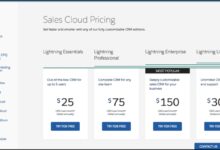
As of 2024, Salesforce CRM pricing starts at $25/user/month for Sales Cloud Essentials and goes up to $300/user/month for Unlimited Edition. These are list prices—actual costs may vary based on contract negotiations, discounts, and bundled services.
- Essentials: $25/user/month – Basic CRM for small teams
- Professional: $80/user/month – Mid-tier with workflow automation
- Enterprise: $165/user/month – Full customization and API access
- Unlimited: $300/user/month – Premium support and advanced features
These plans are just the starting point. Many businesses end up paying more due to add-ons, data storage, or third-party integrations. Always request a customized quote to see the real cost.
“The sticker price is never the full story with Salesforce CRM pricing. Hidden costs can add 30-50% to your annual bill if you’re not careful.” — CRM Industry Analyst, Gartner
Salesforce CRM Pricing by Edition: A Deep Dive
Each Salesforce edition is designed for different business sizes and needs. Choosing the right one is crucial to avoid overpaying or missing key features. Let’s explore each plan in detail.
Sales Cloud Essentials: Best for Small Businesses
Sales Cloud Essentials is the most affordable entry point into Salesforce CRM pricing. It’s ideal for small teams (up to 10 users) that need basic contact, lead, and opportunity management.
- Core features: Contact & account management, email integration, mobile access
- Limited customization and automation
- No API access
- Great for startups or solopreneurs
While it’s budget-friendly, Essentials lacks advanced reporting and workflow automation. If your business grows, you’ll likely need to upgrade within a year or two.
Professional Edition: The Sweet Spot for Growing Teams
Priced at $80/user/month, Professional Edition offers a balance of functionality and cost. It’s popular among mid-sized companies that need more than basics but don’t require full-scale customization.
- Includes workflow automation and approval processes
- Customizable dashboards and reports
- API access (limited)
- Support for third-party app integrations
This edition is often seen as the “sweet spot” in Salesforce CRM pricing for teams that want scalability without the complexity of Enterprise. However, it still has limits on automation and development tools.
Enterprise and Unlimited Editions: For Large-Scale Operations
Enterprise ($165/user/month) and Unlimited ($300/user/month) are built for large organizations with complex sales processes and IT teams.
- Full API access and unlimited customization
- Advanced security and audit trails
- Dedicated support (especially in Unlimited)
- AI-powered analytics (Einstein)
These editions offer the most flexibility but come with a steep price. The Unlimited edition includes 24/7 phone support and faster issue resolution, which can be critical for global enterprises. However, many companies overpay for features they don’t use.
Hidden Costs in Salesforce CRM Pricing You Can’t Ignore
The listed price is just the tip of the iceberg. Many companies are shocked when they see their final invoice. Here are the most common hidden costs in Salesforce CRM pricing.
Implementation and Onboarding Fees
Setting up Salesforce isn’t plug-and-play. Most businesses need consultants or partners to configure the system, migrate data, and train users. These services can cost anywhere from $5,000 to $100,000+, depending on complexity.
- Data migration from legacy systems
- Custom field and workflow setup
- User training and change management
According to Capterra, the average small business spends $15,000 on implementation alone. This is not included in the monthly subscription.
Third-Party App Integrations and AppExchange Costs
Salesforce’s AppExchange offers thousands of apps to extend functionality. While some are free, many premium apps charge monthly fees per user.
- Marketing automation (e.g., Pardot, Marketing Cloud)
- Document signing (e.g., DocuSign for Salesforce)
- Telephony integration (e.g., Aircall, Dialpad)
A single app can cost $10–$50/user/month. If you use 5 apps, that’s an extra $50–$250/user/month on top of your base plan. Always audit your AppExchange usage regularly.
Data Storage and API Call Overages
Salesforce allocates a certain amount of data storage and API calls per user. Exceeding these limits triggers overage charges.
- Additional data storage: ~$0.25/MB/month
- API call overages: ~$100 per 1,000 extra calls
- High-volume transactions (e.g., integrations, batch jobs) can spike usage
One client reported a $3,000 surprise bill in a single month due to API overages from a poorly optimized integration. Monitor your usage through Salesforce’s Health Check tool.
Salesforce CRM Pricing for Service Cloud vs. Sales Cloud
Salesforce offers different clouds for different functions. Sales Cloud and Service Cloud have separate pricing structures, and combining them increases costs.
Sales Cloud Pricing: Focused on Revenue Growth
Sales Cloud is the core CRM for managing leads, opportunities, and sales pipelines. Its pricing follows the standard editions (Essentials to Unlimited).
- Essentials: $25/user/month
- Professional: $80/user/month
- Enterprise: $165/user/month
- Unlimited: $300/user/month
It includes features like lead scoring, pipeline forecasting, and email tracking. Ideal for sales teams of all sizes.
Service Cloud Pricing: Built for Customer Support
Service Cloud is designed for customer service teams, offering case management, knowledge bases, and omnichannel support.
- Essentials: $25/user/month
- Professional: $75/user/month
- Digital: $50/user/month (chat & social only)
- Enterprise: $150/user/month
- Unlimited: $300/user/month
If you need both sales and service functionality, you’ll likely need to purchase both clouds, doubling your per-user cost. For example, a user with both Sales and Service Cloud licenses could cost $240/month in Professional Edition.
Can You Mix and Match Clouds?
Yes, but it gets complicated. Salesforce allows mixed editions and clouds, but licensing and user management become more complex.
- Users can have multiple cloud licenses
- Admins must manage permissions and access carefully
- Consolidated billing is available but requires planning
Many companies use Salesforce’s Customer 360 approach to unify data across clouds, but this often requires additional investment in integration tools.
Salesforce CRM Pricing for Marketing Cloud and Other Add-Ons
Marketing Cloud is one of Salesforce’s most powerful—and expensive—add-ons. It’s not included in standard CRM pricing and requires a separate contract.
Marketing Cloud Pricing Structure
Marketing Cloud doesn’t have a per-user model. Instead, it’s priced based on email volume, features, and data usage.
- Entry-level plans start at ~$1,250/month
- Pricing scales with number of contacts and sends
- Advanced features (e.g., Journey Builder, Advertising Studio) cost extra
According to G2, the average mid-market company pays $2,500–$5,000/month for Marketing Cloud. This makes it one of the most significant add-ons in Salesforce CRM pricing.
Pardot: The Mid-Tier Marketing Automation Option
Pardot is Salesforce’s B2B marketing automation tool, often seen as a more affordable alternative to Marketing Cloud.
- Starts at $1,250/month for up to 10,000 contacts
- Scales with contact count and features
- Integrates seamlessly with Sales Cloud
Pardot is ideal for companies focused on lead nurturing and ROI tracking. However, it’s still a major cost add-on not included in base Salesforce CRM pricing.
Other Premium Add-Ons That Impact Total Cost
Beyond marketing, several other tools can inflate your Salesforce bill.
- Einstein AI: $50–$100/user/month for predictive analytics
- Field Service Lightning: $150–$300/user/month for service dispatch
- Commerce Cloud: Custom pricing, often $50,000+/year
- MuleSoft: Integration platform starting at $5,000/month
These tools are powerful but can turn a $80/user/month plan into a $300+ expense. Always evaluate ROI before adding premium features.
How to Reduce Salesforce CRM Pricing Costs
You don’t have to pay full price. With the right strategy, you can significantly reduce your Salesforce CRM pricing burden.
Negotiate Your Contract and Get Discounts
Salesforce rarely gives list prices to enterprise clients. Always negotiate, especially for multi-year contracts or large user counts.
- Ask for annual billing discounts (10–20% off)
- Bundle multiple clouds for better rates
- Nonprofits and startups may qualify for discounts (up to 50–90% off)
Salesforce’s Power of Us Program offers deep discounts for nonprofits, which can save organizations tens of thousands annually.
Optimize User Licenses and Roles
One of the biggest cost leaks is over-licensing. Not every user needs an Enterprise license.
- Use Chatter Free or Lightning Platform Starter for read-only users
- Assign lower-tier licenses to team members who only view data
- Regularly audit inactive users and deactivate them
One company saved $48,000/year by switching 30 users from Enterprise to Professional licenses. Use Salesforce’s License Optimization reports to identify savings.
Leverage Free Tools and Community Editions
Salesforce offers free tools that can reduce dependency on paid add-ons.
- Salesforce Community Cloud: Free for up to 50 members
- Process Builder and Flow: Free automation tools (vs. paid workflow apps)
- Trailhead: Free training to reduce onboarding costs
By using native tools instead of third-party apps, you can avoid recurring subscription fees. For example, Flow can replace $20/user/month automation tools in many cases.
Salesforce CRM Pricing in 2024: Trends and Predictions
The landscape of Salesforce CRM pricing is evolving. Understanding current trends can help you future-proof your investment.
Shift Toward Bundled Suites and Customer 360
Salesforce is pushing Customer 360—a unified platform combining Sales, Service, Marketing, and Commerce Clouds.
- Bundled pricing offers potential savings
- Encourages ecosystem lock-in
- May reduce integration costs
However, bundles can also force companies to pay for unused features. Evaluate whether you truly need all components before committing.
Increased Focus on AI and Einstein Features
AI is becoming central to Salesforce’s value proposition. Einstein features are now standard in higher editions but cost extra in lower ones.
- Einstein Lead Scoring, Activity Capture, and Forecasting are premium add-ons
- Expect AI features to become more expensive or bundled into higher tiers
- Competitors are offering AI at lower prices, pushing Salesforce to adapt
In 2024, AI could account for 15–25% of your total Salesforce CRM pricing if you use multiple Einstein tools.
Pricing Transparency and Customer Pushback
Customers are demanding more transparency. Salesforce has responded with clearer pricing guides, but complexity remains.
- More third-party cost calculators are emerging
- Consultants are helping businesses audit their Salesforce spend
- Some companies are switching to alternatives like HubSpot or Zoho due to cost
A 2023 Forrester report found that 42% of mid-sized companies consider Salesforce “too expensive” for their needs.
Alternatives to Salesforce CRM and How They Compare on Price
Salesforce isn’t the only option. Several CRM platforms offer similar functionality at lower price points.
HubSpot CRM: Free Forever Plan and Transparent Pricing
HubSpot offers a robust free CRM with no user limits. Paid plans start at $20/month for basic tools.
- Free plan includes contact management, email tracking, and pipelines
- Paid tiers: Starter ($20/month), Professional ($1,400/month), Enterprise ($3,200/month)
- No per-user pricing in higher tiers (seat-based only in Starter)
HubSpot is often 30–60% cheaper than Salesforce for mid-market companies. However, it lacks the deep customization of Salesforce Enterprise.
Zoho CRM: Budget-Friendly with Strong Features
Zoho CRM starts at $14/user/month and offers a full suite of tools at a fraction of Salesforce’s cost.
- Free plan for up to 3 users
- Standard: $14/user/month
- Professional: $23/user/month
- Enterprise: $40/user/month
Zoho is ideal for small to mid-sized businesses that want affordability without sacrificing functionality. It’s frequently cited as the top Salesforce alternative for cost-conscious buyers.
Microsoft Dynamics 365: Enterprise Competitor with Flexible Licensing
Dynamics 365 integrates tightly with Microsoft 365 and offers competitive pricing for large organizations.
- Sales Professional: $65/user/month
- Customer Service: $95/user/month
- Can be bundled with Office 365 licenses
For companies already using Microsoft products, Dynamics can reduce integration costs and offer better ROI than Salesforce CRM pricing.
Is Salesforce CRM pricing worth it?
For large enterprises with complex needs, yes. For small businesses, it depends. Salesforce offers unmatched scalability and ecosystem depth, but at a premium. If you need AI, global support, and deep customization, it’s worth the cost. If you’re a small team, consider starting with a cheaper alternative and scaling later.
How can I get a customized Salesforce quote?
Visit salesforce.com and click “Request a Demo” or “Contact Sales.” Provide details about your team size, industry, and needs to get an accurate quote.
Does Salesforce offer a free trial?
Yes. Salesforce offers a 30-day free trial for most editions. You can explore Sales Cloud, Service Cloud, and other tools without commitment. Sign up at salesforce.com/free.
Can I switch Salesforce editions later?
Absolutely. You can upgrade or downgrade editions at any time. However, downgrading may result in data or feature loss, so plan carefully. Salesforce provides migration tools to ease the transition.
Are there nonprofit discounts for Salesforce?
Yes. Through the Power of Us Program, eligible nonprofits can receive Salesforce licenses at 80–90% off. Some products, like Marketing Cloud, are available for free. Apply at salesforce.org.
Salesforce CRM pricing is complex, but not impossible to master. From base editions to hidden fees and alternatives, the key is to plan ahead, negotiate wisely, and continuously optimize your usage. Whether you’re a startup or a global enterprise, understanding the full cost picture empowers you to make smarter decisions. Don’t just pay for features—pay for value.
Salesforce CRM pricing – Salesforce CRM pricing menjadi aspek penting yang dibahas di sini.
Further Reading:
